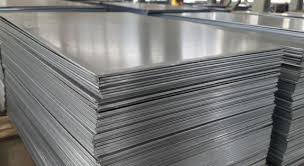
Stainless Steel 304
304 stainless steel sheet (INOX 304), containing approximately 18% chromium and 8% nickel, is the most commonly used type of austenitic stainless steel, resista…
İncele →Upload your file for laser cutting, get an instant quote and start production.

For bulk orders you can request a special quote.
A measurable, transparent and easy-to-manage workflow, from prototype to repeat production.
01
Waiting around for quotes is over.
The moment you upload your file, the system calculates the price in seconds from material, thickness, cutting time and quantity. Transparent and clear.
02
±0.05 mm cutting tolerance
Clean, burr-free edge quality
Repeatable, consistent production
03
Approved orders go into production quickly.
Thanks to our optimised production process, your parts are prepared and shipped in a short time.
A clear quote in seconds
Controlled and measurable production
A traceable workflow
Careful packaging and shipping
MATERIALS
With a range of thicknesses and surface options, pick the material that suits your project.
304 stainless steel sheet (INOX 304), containing approximately 18% chromium and 8% nickel, is the most commonly used type of austenitic stainless steel, resista…
İncele →
316 stainless steel sheet is produced by adding molybdenum to grade 304, which gives it considerably higher corrosion resistance. It withstands salt water, chem…
İncele →
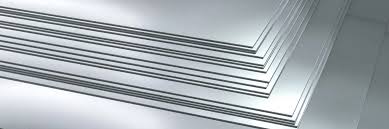
DKP sheet is a low-carbon flat steel produced by cold rolling hot-rolled steel, which makes it smoother, thinner and easier to form. The name stands for "deep d…
İncele →
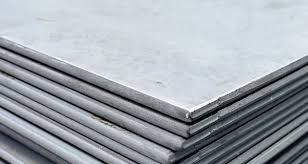
HRP sheet (Hot Rolled Pickled) is a smooth-surfaced, high-strength metal product obtained by removing the oxide layer from the surface of hot-rolled steel (blac…
İncele →
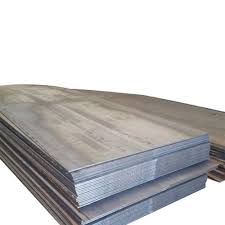
Structural carbon steel is a building material produced by alloying iron and carbon, containing up to 2.1% carbon and offering high strength, flexibility and a…
İncele →
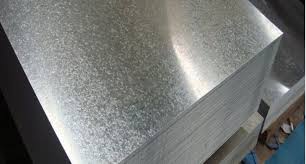
Galvanising is the process of coating iron or steel with molten zinc to protect it against corrosion. Usually carried out by dipping the metal in a zinc bath at…
İncele →
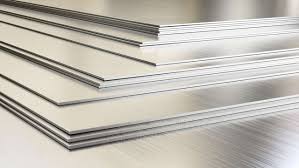
Aluminium is a silvery-white, light, ductile and corrosion-resistant metal with atomic number 13 and the symbol Al. It is the third most abundant element in the…
İncele →
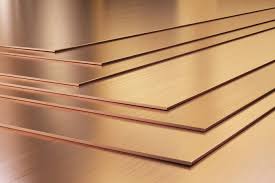
Copper sheet is a thin, flat metal plate made from pure copper or copper alloys, offering high electrical and thermal conductivity, corrosion resistance and goo…
İncele →
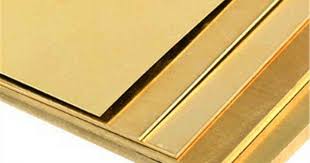
Brass sheet is a yellow metal plate produced by alloying copper and zinc, standing out for its high corrosion resistance, attractive golden colour and easy mach…
İncele →MATERIALS AND THICKNESS
At Metacut we offer fiber laser cutting in ten different metals: stainless steel, carbon steel, DKP and HRP sheet, galvanised sheet, aluminium, copper and brass. Every material behaves differently under the beam: stainless steel is chosen for architectural and food-industry work that demands high corrosion resistance, aluminium for signage and electronic parts where light weight and easy machining matter, and copper and brass where conductivity and a decorative finish come first.
The thickness range we work in runs from 0.4 mm to 40 mm. On thin sheet our priority is a clean, burr-free edge; on thick sections it is dimensional stability. Our maximum sheet size is 1500 x 3000 mm, and any part that fits inside it is cut in a single pass. The minimum part size is 6 x 6 mm and the smallest detail we can hold is around 1 x 1 mm. Dimensional tolerance stays within a +/-0.13 mm band, and that figure holds regardless of how large the part is.
If you are unsure which material to pick, just tell us the thickness, the surface finish you expect and the environment the part will work in; we will go through the suitable alternatives together. For parts that will live outdoors or in damp conditions, galvanised sheet or stainless steel is usually the answer, and for parts that will be painted, mild steel is normally the most economical solution.
0.4 – 40 mm
Thickness range
1500 × 3000 mm
Maximum sheet size
6 × 6 mm
Minimum part size
±0.13 mm
Dimensional tolerance
APPLICATIONS
Machine building, the automotive sub-industry, electrical panel manufacturing, white goods, furniture, advertising and signage, architectural applications and engineering teams developing prototypes are among the fields we work with regularly. Brackets, flanges, enclosures, chassis parts, panel covers, channel-letter bodies and decorative panels make up a large share of our daily production.
We set no lower limit on quantity. A single prototype and a repeating production run both go through the same digital ordering flow. At the prototype stage we schedule short production runs so you get feedback quickly, and when you move to series production you simply upload the same file again and receive a part identical to your previous order. Repeatability comes from measuring every batch by the same method.
For bulk orders and continuing work we price separately. If you are planning a high-volume job, upload your file, look at the automatic quote and then get in touch with us; we prepare a special offer based on the quantity and how often the job repeats.
Machine building
Automotive sub-industry
Electrical panels
White goods
Furniture
Advertising and signage
Architectural applications
Prototype production
FILE PREPARATION
For the online quoting system to read your file correctly, the cutting lines have to form closed contours. A line left open, or two lines drawn on top of each other, can make the system calculate the cutting path incorrectly. Clearing unnecessary layers, dimension lines, text and frames before you send the drawing noticeably improves the accuracy of the quote.
The drawing must be in millimetres and the part must be drawn at its real size; a scaled drawing means a wrong price and a wrong part. Holes and internal cut-outs also have to be defined as closed contours, otherwise those areas may be left uncut. As a general rule for very small holes, the hole diameter should not be smaller than the material thickness.
Once you have uploaded your file the system automatically extracts the part’s length, width and perimeter; you can see and confirm these values on the approval screen. If the dimensions come out different from what you expected, the cause is usually the unit or the scale, and correcting the file and uploading it again is enough. Whenever you are not sure, send us the file and our technical team will check it and come back to you.
01
Closed contours
Cutting lines must be closed, with no overlapping double lines.
02
Millimetre units
Draw the part at its real size and in millimetres.
03
Clean layers
Remove dimension lines, text and frames from the file.
04
Hole diameter
The hole diameter must not be smaller than the material thickness.
FREQUENTLY ASKED QUESTIONS
GOOGLE REVIEWS
You can read up-to-date reviews from Metacut customers on our Google Business profile.